
Not a hidden character
One of the big frontier-model makers, Anthropic, announced that it is starting to watermark the text its models generate. You have probably met watermarks before (stock photos, demo audio files), but a watermark in text feels a little intangible at first.
You might assume it is some invisible character or word tucked into the paragraph. If it were, scrubbing it would not be hard. The real answer comes from mathematics, because it uses the same thing every LLM is built on: statistics.
I have covered how LLMs work in this series already (tokenization, generation), but here is the short refresher. When an LLM generates the next fragment of text (a token), it is essentially predicting what comes next using probability. We tend to imagine it always picks the single most likely option. In reality there is variation built in (you can steer that partly with the temperature parameter, among other dials), so the output feels a bit more creative, a bit more human. That is also why the same chatbot can give a (slightly) different answer to the same prompt.
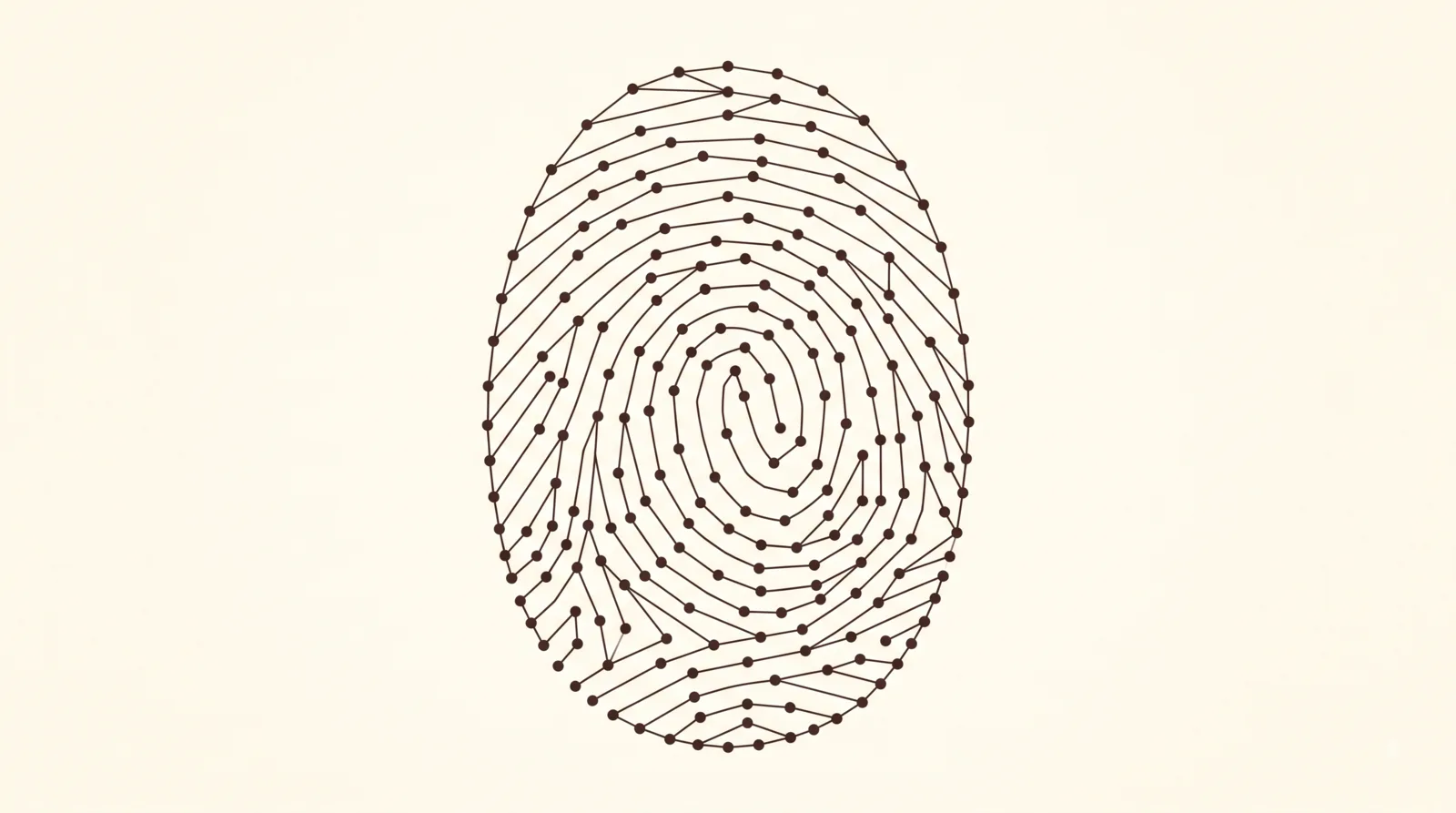
The watermark algorithm turns that dial one more notch: it nudges the probability of some tokens up and others down. What you get is a statistical pattern invisible to the human eye, a kind of fingerprint of that system, which detectors holding the watermark key can score to show which provider marked the content.
A few words will not wash it off
The obvious question: if that is “all” it is, can’t you just rewrite a word or two, poke the generated text here and there, and beat the detectors? It is not that simple.
Just as fingerprint matching does not need a perfect print, a text watermark only needs enough of the pattern to remain recognizable in fragments. To be sure of scrubbing it, you might have to rewrite so thoroughly that you start wondering whether using AI was worth it in the first place.
But let’s not be naive. Anyone who has scrolled the Reddit threads these past few days has seen a large share of the community already brainstorming how to hide the watermark, and their motives are not always shady.
A spectrum, not a switch
The same mark does not care how AI showed up. Developers worry that nudging token odds is harmless in a paragraph but risky in code, where the wrong next token can break the program. Others point at translation or proofreading: the model processed the text; that does not make it the author. Detection draws no such line.
The deeper problem is that “using AI” can mean very different things.
Take this post. I could write it by dropping one prompt into a chat and handing it every decision, every sentence. Then neither the thinking nor the creativity is mine. I instruct; the AI executes like a ghostwriter. I can still put my name on it, but my added value is zero.
I could research the topic, gather and process sources, build context, write outlines from that. Now there is intellectual work in it: opinions filtered through lived experience, creative choices I make. And the AI appears as an editor helping turn that into something readable.
Or I could process and write every letter myself, rephrase a hundred times, reread endlessly, shape the layout, and use AI at most for grammar checks or translation.
That is a spectrum: from surrendering creativity entirely (the user as prompter only) to total control, where AI is just a smarter spell-checker. Walk that spectrum and the real difference sits in the energy, the personality, the “suffering” that comes with manual work, which we often confuse with quality. The two do not always travel together. Wrestling with a post does not guarantee it is good. Getting help from AI as an experienced editor does not guarantee the result is synthetic “AI slop.” And originality, if it lives anywhere, lives somewhere on that spectrum, not in a yes/no watermark.
We barely have shared language for these shades yet (“vibe coding” versus “AI-assisted coding” is an early, messy attempt). Until that settles, the watermark can land on every piece of content alike, regardless of how large or small the AI’s role was.
Co-author by default
One example of how unsettled the judgment still is: Claude Code lists itself as a co-author by default when you use it for coding, and reactions are mixed. Some people turn the feature off, arguing that the real intellectual and engineering work is theirs, and AI is just a smarter compiler: a tool, and you do not credit a tool as an author. Others would make the feature mandatory, so it is clearly documented which code came from AI.
We do not yet know how to judge and define our own AI use. In that fog, it is hard to expect miracles from a detection algorithm.
I have always felt I stand somewhere between the two camps. I understand people who flinch from every AI-touched post, who see the flood of synthetic content as the death of the internet, and who are hunting for originality. I also understand people who believe that if AI takes part in the making, the result can still be original and valuable. Nothing is purely black or white. But the watermark is here, and it will affect us no matter the shades.
One possible path: more AI-free, original content, including here on LinkedIn. If we associate AI use with the easy way out, with laziness, with soulless synthetic posts, we will not want our own work stamped that way. That can even lead people to leave small imperfections in on purpose, so the piece feels more human.
The other path: AI use normalizes and becomes more accepted, and the watermark is not automatically a stigma. Then the author can signal how and where they used AI, and that becomes part of content etiquette.
And what will tip the scales? Flip back a few weeks in this series and you already have the answer, but I’ll say it: the algorithms. It all depends on how accurate and reliable detection becomes, and what each platform does with it. Just a label, or a downrank? The moment the watermark has a real effect on engagement, movement starts and the balance shifts.
Until then: would you punish AI use, or let it go?