

There is a version of the web you cannot see. AI is reading it for you, and it does not look the way you think it does.
I know because since March I have audited more than fifty websites the way an AI would, mapping individual enterprise sites and batch reports across healthcare, finance, tech, and more: how their pages connect, what contradicts what, what a model would actually pull. None of them had information architecture I would call clean.
A lot of people now ask an AI before they Google. They type a question into a chat, and the model answers in one of two ways. Sometimes it draws on what it already knows from training, the compressed residue of everything it was fed. Sometimes it goes out and reads across the live web. Either way, it comes back with a paragraph or two. The person asking does not click anywhere. When the model did pull from pages, they never see those pages. Most of the time, they do not even ask which ones those were.
That little summary, the one they read instead of opening five tabs, is becoming a real part of how people decide what to buy, who to trust, and which brands they have heard of. SparkToro’s early-2026 look at US Google searches found that about two thirds now end without a click. LLM-referred traffic is still a thin slice of overall visits, but one mid-2026 analysis of millions of referral sessions put its growth at nearly tenfold since late 2024.
This is a quiet shift in what the internet actually is for the people using it. And I think it has one consequence almost nobody in marketing is ready to say out loud.
AI reads the web differently than you do
When a human visits a website, they see headlines, design, photos, the layout. They scan, they make a quick judgment about whether the page looks credible, they click around. AI does none of that. It looks at what is actually written, and it tries to extract entities, facts and signals. What is this product. Who makes it. What do other people say about it. How does it compare to similar things.
It also does not read only your site. When a model answers a question about your product, it has already pulled in Reddit threads, Trustpilot reviews, independent test sites, competitor pages, forum posts. Your official message is sitting next to the actual consensus. If the two disagree, the AI tends to lean toward consensus.
This is where marketing fluff stops being harmless and becomes a real problem. A line like “industry-leading innovative solution provider” carries no information for an LLM. It is empty calories. The model cannot summarise it, cannot fact-check it, cannot compare it to anything. It just skips past it and keeps looking for something with substance.
There is a related shift in how the people who do this for a living talk about it. SEO, the discipline of getting a site to rank well in Google, did not disappear. It became the foundation. On top of it sits something often called GEO, optimising for generative engines. Same plumbing, different goal. The goal is no longer the click. The goal is to be the source the AI cites.
The end of the paid study
Think about how much of corporate communication works today. “We are the #1 solution,” according to a study the company itself commissioned. A landing page that calls an ordinary feature revolutionary. An “independent” comparison that somehow always crowns the sponsor.
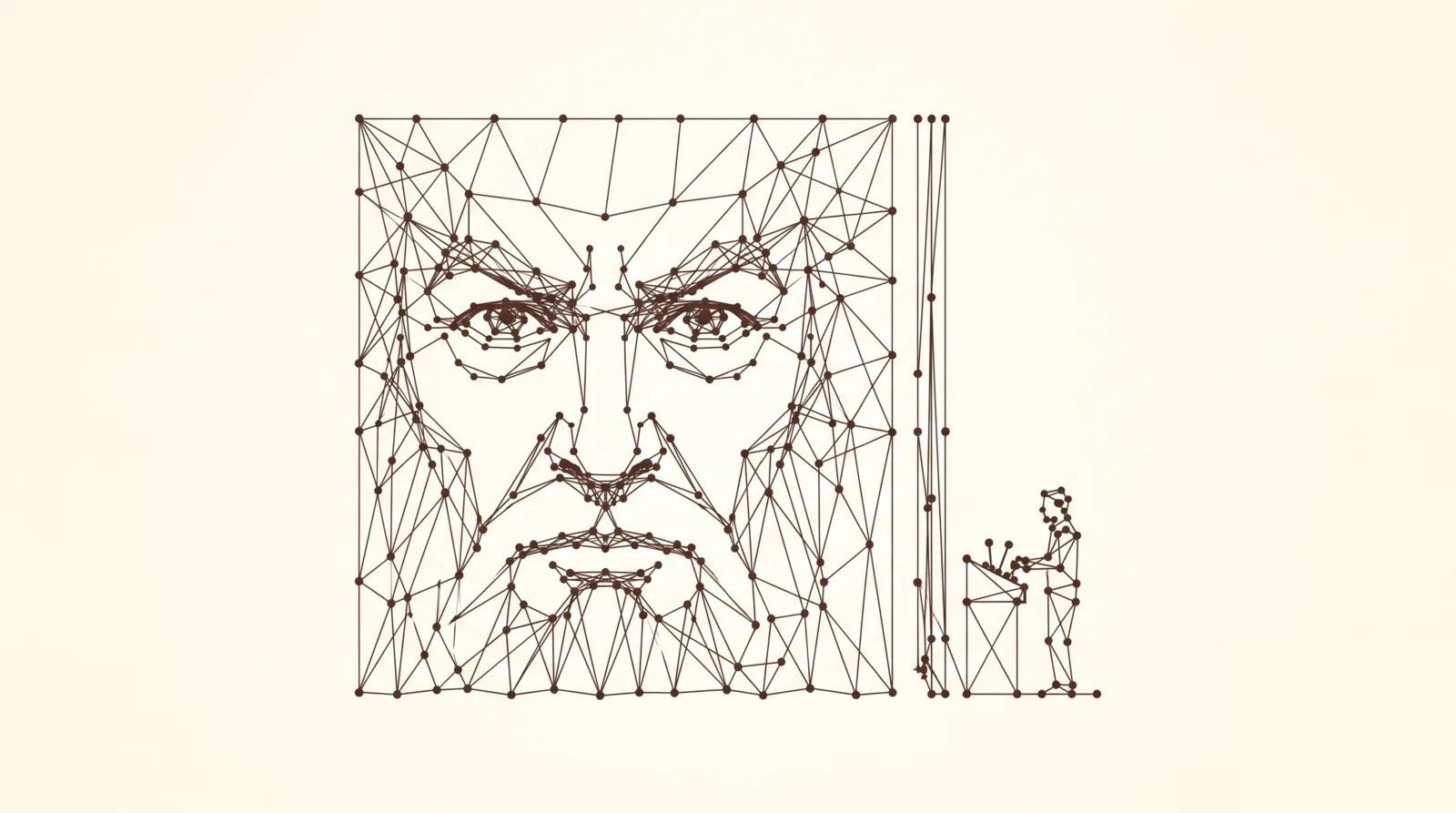
That machinery worked for one reason: the audience did not cross-reference. Nobody opened twelve tabs to check whether the award was real or the study was bought. Google would rank the well-optimised page carrying the claim, the visitor would read it, and the claim would do its job. It was a Wizard of Oz trick. The giant face on the curtain was the claim. The man behind it was the paid study, the agency copy, the carefully staged comparison. The audience was never supposed to look.
Now something always looks. The model reads the paid study, then reads the Reddit thread where actual users complain about the exact thing the study praised, then reads two independent tests, and then it writes one paragraph. Whatever survives that paragraph is what the user believes about you. The AI is not hostile to your brand. It is just indifferent to your framing, and indifference turns out to be much harder to game.
And the spin machine is already adapting. If models weight Reddit threads and review sites more heavily than your homepage, you will see the same playbook that worked on Google a decade ago, transplanted. Astroturfed threads. Sockpuppet accounts. Agencies hired to seed “authentic” discussion until the statistical average starts looking warmer. Not because the product got better. Because someone flooded the platforms the AI cites most.
The mess underneath
Lately I have been spending a lot of time inside enterprise web architectures, and I keep noticing the same thing.
Big company websites tend to look, structurally, a bit like aircraft carriers. Thousands of pages. Dozens of teams that have edited them over the years. Orphaned subdomains nobody really owns anymore, sub-brand sites that have not been updated since 2019, PDFs from 2018 that quietly contradict the live product page, several different “About us” sections written by different agencies for different campaigns.
Those fifty-plus sites I mentioned at the top? Same pattern across the board. Orphaned pages, contradicting specs, years of layered edits. The kind of mess that was easy to ignore when humans rarely stumbled on it.
For most of the last twenty years, this kind of mess did not really matter. The internal argument was always: those pages barely get traffic, nobody finds them anyway, the cleanup is not worth it. That argument was reasonable, and for a long time it was correct.
It is not correct anymore. AI does find those pages. It treats them as part of the same signal as the polished homepage. The 2018 PDF showing a discontinued spec sits in the same dataset as the current product description. The mess is no longer invisible, because someone is now reading all of it. And that someone is the thing answering questions about your company.
The flip side is interesting. Smaller companies do not have an aircraft carrier. At most they have a destroyer. A coherent fifty-page site, a clear product description, a few honest reviews. When the AI builds an answer about that category, the small company has a much easier time being understood. The model does not care about brand size. It cares about which signals are clean. Big-budget marketing used to be a structural advantage. In a chat-mediated web, an unmaintained content footprint becomes a structural disadvantage. Size starts to work against you when the noise is your own.
Why this wave is different from the last one
Here is a slightly uncomfortable observation from watching big marketing departments up close. They handled the last hype wave, Web 3.0 and the metaverse, remarkably well. Buy a virtual plot, issue a press release, put “metaverse strategy” in the annual report. It fit perfectly, because that hype ran on the same fuel their machinery already used: announcements, positioning, narrative.
AI does not run on that fuel. You cannot press-release your way into a model’s answer. The model reads what is actually out there: your pages, your users’ complaints, your competitors’ specs. It generates its answer from patterns in all of it. It is, in a very unglamorous, purely statistical way, a bullshit detector. Not because it judges you, but because it averages you against everything else that has been written about you.
That is my honest worry, and my honest bet: the departments that were most comfortable in the announcement economy will adapt the slowest, because for the first time in decades, the channel cannot be charmed.
Will this make the web soulless?
Last episode I wrote about the dead internet and enshittification: feeds filling with slop, platforms extracting until the town square becomes a billboard. This is a related but narrower worry. If brands start writing flat, factual, bullet-pointed copy because that is what gets cited, do we lose voice, storytelling, humour?
Part of me thinks we already lost a version of that. LinkedIn fragments, YouTube thumbnails, the culture that looks like one giant A/B test. Humans have been writing for algorithms for years. AI just changes which algorithm you are optimising for.
But there is a difference between writing clearly and writing like a content farm. Honest human language still builds the thing no model can fabricate from whole cloth: an actual emotional bond with the people who read you. What is dying is not personality. What is dying is the substitute: the synergistic-solution-provider language that never built trust anyway.
The soulless version is not “companies started writing plainly.” It is what happens when every surface becomes another billboard dressed up as a conversation: Reddit threads that read like press releases, review sites that mysteriously agree, consensus manufactured by volume rather than earned. That is enshittification with a new middleman. The web does not go sterile because someone explains their product in plain English. It goes sterile when the places we trusted to be human start sounding like marketing departments with usernames.
The math stopped rewarding spin
For decades, a big chunk of corporate communication has been some variation on “we are the best, and here is a study we paid for to prove it.” That whole machinery quietly assumed the audience would not cross-reference. Now something does, every time anyone asks a question about you.
Maybe the funniest plot twist of this whole AI moment is this. The corporate spin machine, the talking around flaws, the agencies hired to make small features sound revolutionary, may finally be losing its returns. Not because customers got tired of it. Because the math does not reward it anymore.
I keep turning over one question, and I do not think the answer is settled yet. When the AI in everyone’s pocket reads everything ever written about a company and averages it into one paragraph, maybe honesty finally becomes the cheapest marketing strategy. Or maybe the spin machine simply finds a new curtain. Both feel plausible from where I am sitting.