
What Obsidian actually is
Strip away the enthusiasm and Obsidian is almost disappointingly simple: a free app that sits on top of a folder of plain markdown files. Last week I wrote about markdown, the plain-text format the whole AI wave runs on. Obsidian is what happens when someone takes that idea seriously for personal notes. Your notes are text files, on your computer, in a folder you can see. The app calls it a “vault,” but it is just a folder.
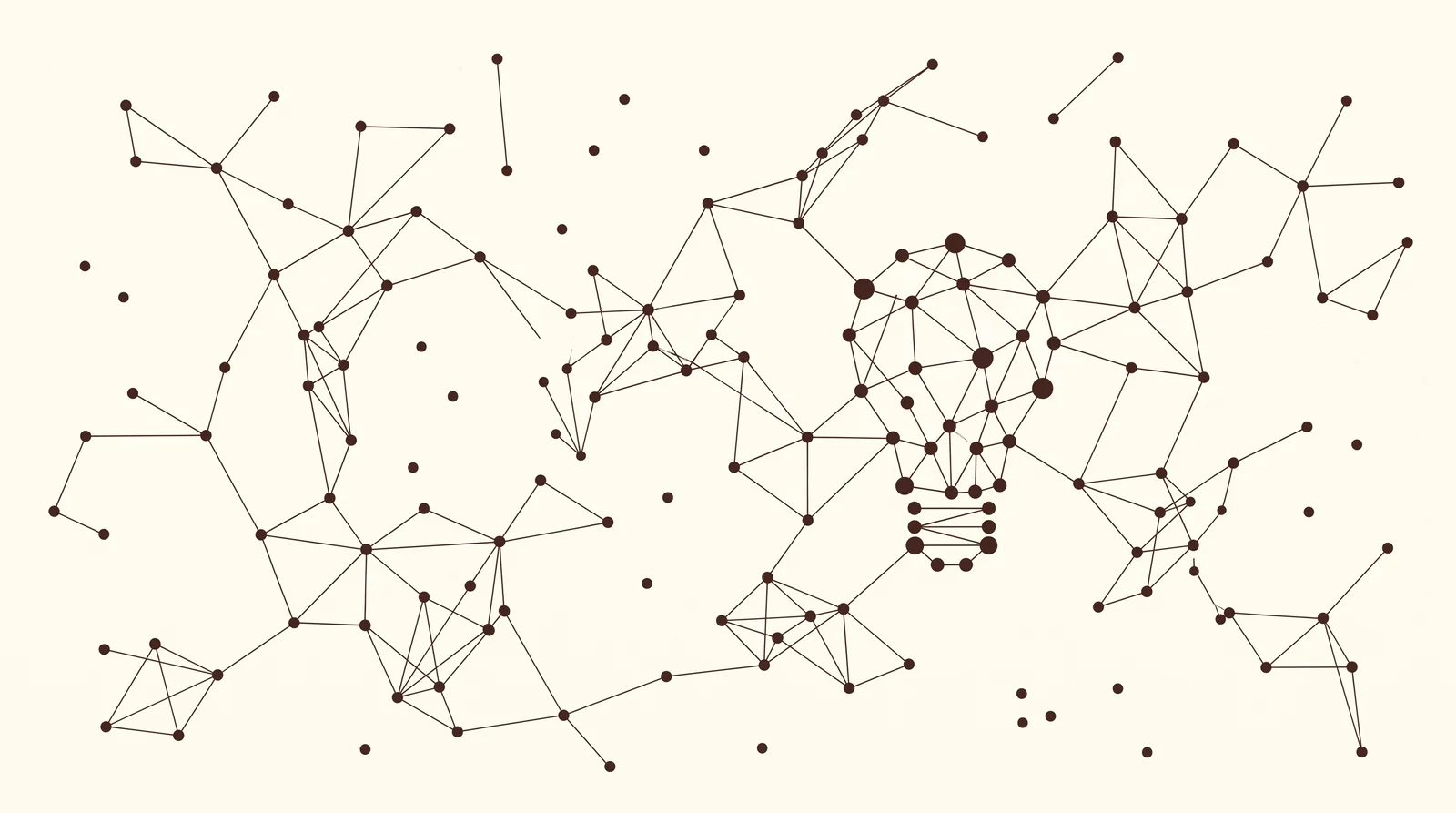
Its one big idea is the link. Type two square brackets around a phrase, like [[project ideas]], and that note is connected to this one. That is the entire skill. Two brackets. The app handles the rest: every note automatically shows what links to it, and a graph view draws your whole vault as a living map: every note a dot, every link a line.
Two properties matter more than any feature list. First: because it is plain text, there is no lock-in whatsoever. Delete Obsidian tomorrow and your notes remain ordinary readable files, forever. Second: it is local. Your accumulated thinking lives on your machine, not in a vendor’s database. That distinction matters more each year.
Why linking beats collecting
Most note-taking, mine included for two decades, is write-only memory. We capture diligently: meeting notes, highlights, shower thoughts, all filed into apps optimized for capture, sync, and search. And then the notes sit there. A landfill with a search bar.
The problem is not laziness. It is that search only finds what you already know to look for. The note you forgot you wrote? The connection between two things you never thought to connect? Search is silent. It answers questions; it never volunteers anything.
Links are the opposite mechanism. Every link is a two-second act of curation: a human-verified statement that these two things belong together. Individually trivial. Compounded over months, they turn a pile into a web, and the web does something a pile cannot: it shows you structure. Old ideas resurface because they are attached to what you are doing now, not because you remembered to search for them.
This is not a new idea. In 1945, engineer Vannevar Bush described the memex: a desk that stored all your documents and linked any two into trails of thought. Sociologist Niklas Luhmann ran the analog version: tens of thousands of paper slips, cross-referenced, a system he credited for his famously prolific output. He called his slip-box a conversation partner: it surprised him. The idea is eighty years old. What is new is that it is free and installs in a minute.
The shared workspace for AI
If linking notes were just a personal productivity trick, it would not matter much. What changed everything was what happened when AI tools entered my daily workflow.
I once wrote here that context beats prompting: the quality of what you get from AI depends less on clever phrasing and more on what the AI knows about your situation. The practical question ever since: fine, but where does that context live? Scattered across chats? Re-explained every morning, from scratch, forever?
For me, it lives in the vault. The notes are plain markdown. My AI tools read them natively, the same files I read, with no translation layer. That was the whole point of last week’s markdown piece. The links tell an AI which notes belong together: not guessed relationships, but curated ones. When an AI assistant helps me plan a project, it starts from months of my actual thinking instead of a blank chat window.
The vault stopped being my second memory. It became the shared memory between me and my tools: readable by both of us, owned by me.
There are two honest costs. The first week feels like overhead. Linking is a habit, and habits have a learning curve. And the graph is a byproduct, not magic: if you do not link, a vault is just a prettier folder. There is a reason the “second brain” marketing makes me wince: nothing here thinks for you. What you get is humbler and better: a map of what you have already thought, that both you and your machines can walk again.
Why every illustration looks like this
If you have been reading Quiet Nodes for a while, you may have noticed every illustration here looks the same: dots, connected by lines. A dog made of dots and lines. A Death Star made of dots and lines.
That was never just an aesthetic. It is the graph view. It is what my Quiet Nodes production system literally looks like in Obsidian: every episode a cluster of linked notes, with the idea, research, and draft all holding hands. You have been looking at my mental model of knowledge this whole time: nothing stands alone, everything is dots and the lines between them, and the lines are where the thinking lives.
Your thinking accumulates somewhere: notes, documents, emails to yourself, chats with an AI. If something drew you a map of it today, would there be lines on it? Or twenty years of dots, waiting?