
I once decided to take webscraping seriously. The Python crawlers I was writing took hours to finish, sometimes a full day, and they kept my main computer busy the whole time. It felt wrong to lock up my workstation just so a script could keep clicking through pages on its own.
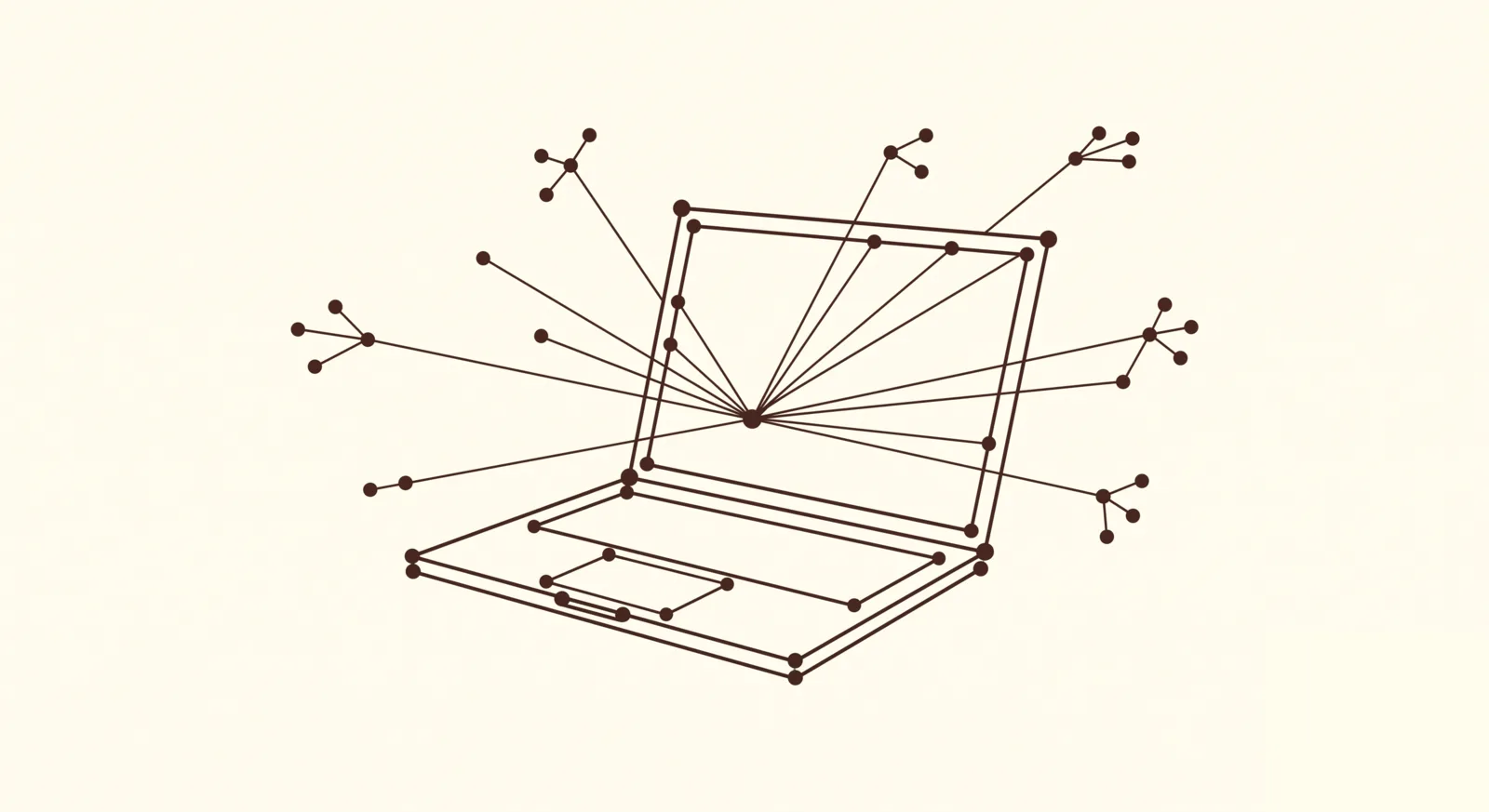
I looked around the apartment and found an old laptop with a dead battery sitting in a drawer. It was useless for normal work, but if I plugged it in and left it on the desk, it could do exactly one job: babysit the crawler.
That was the door. I didn’t know it at the time, but I had just walked into the home lab world.
What is a home lab anyway
The name comes from the IT crowd. Sysadmins, network engineers, and developers needed a safe place to break things on purpose. You can’t experiment with a new server config on the company production network, because if it breaks, the company breaks with it. So the more enthusiastic ones bought used, loud, big enterprise gear and put it in their basement or garage. That was the original home lab. A place to study for certifications, test setups, and learn without consequences.
The modern version looks very different. The hardware shrunk. A home lab today can be a Raspberry Pi behind the TV, a retired laptop on a shelf, or a small mini PC the size of a paperback. The point also shifted. People aren’t only experimenting anymore. They’re running real services for themselves: a private Netflix from their own files (Plex, Jellyfin), a network-wide ad blocker that works even on smart TVs (Pi-hole), a smart home hub that doesn’t talk to foreign servers (Home Assistant), or a personal Google Drive replacement (Nextcloud).
A home lab today is closer to a small private cloud than a hobbyist sandbox. And the community around it is genuinely growing.
The real catalyst is not AI
I’d love to tell you AI is the reason this is happening, because that would be the clean story for a site about AI. It is not the full truth. The actual catalyst is more boring: people are tired of subscriptions.
The SaaS model started off feeling fair. Instead of paying a fortune for Photoshop, you paid a few dollars a month. Instead of buying a GPS unit, you used Google Maps for free. Instead of owning music, you paid Spotify, and the catalogue you got back was much bigger. For a while it really did feel like a better deal.
Now the pendulum swung too far. Printer makers lock ink cartridges to a subscription. Car makers tried charging a monthly fee for the heated seats already installed in the car you bought. Software you used to own is now rented. Devices you paid for refuse to work without an active account. The thousand small cuts started to add up.
Self-hosting is the natural reaction. Buy the hardware once. Run open-source software. Stop paying monthly for things you only need occasionally. Take your data with you when something changes. The energy underneath the home lab boom is mostly that.
And then AI made privacy personal
There is a second, smaller push, and this one is connected to AI in a strange way.
When the AI boom started, a lot of people realized for the first time that the documents, photos, and emails sitting in cloud services are potential training material. The “if it’s free, you are the product” line had been around for years, but AI gave it a new face. Some companies were quick to update their terms of service. Others were quiet about it. Either way, the conversation moved from theoretical to personal.
For some people, this pushed them toward self-hosting in the classic sense, like running their own Nextcloud instead of using Google Drive. For others, it pushed them in the opposite direction: build a powerful machine at home so they could run AI models locally, with no provider seeing the prompts at all. Same instinct, two different shapes.
The wall that finally fell
Self-hosting always required three things. Cheap hardware, free software, and the knowledge to glue them together. The first two have been solved for a long time. Old laptops are easy to find. Linux, Docker, and every open-source service you might want are free to download.
The wall was always knowledge. To run a real home server, configure a reverse proxy (the traffic cop that routes requests to the right service), isolate services into containers, and back it all up properly, you needed real sysadmin skills. And the older Linux forums weren’t kind to beginners. The standard reply to a basic question was often “read the manual”, with a swear word in the middle.
AI quietly broke that wall down. You don’t have to memorize the syntax of a Nginx config file. You don’t have to know the exact name of every Linux package. You explain what you’re trying to do, paste your error messages, and a patient assistant walks you through it and explains why it works. It is not that AI made you a sysadmin. It is that the IT department moved into your house.
That was my actual experience. I had a goal, an old laptop, and a lot of questions. The first time I tried to run a real virtualization stack, I broke my home network three times in a row. Each time, the AI helped me back out, explained what I had done wrong, and showed me a cleaner way. Five years ago I would have given up after the second mistake. With AI sitting next to me, it felt like a hobby instead of a fight.
After the first server, I added a switch. Then a Raspberry Pi. Then Pi-hole for the network. Then a reverse proxy. Then Docker. Then Syncthing across all my devices. Today even the analytics on my website is self-hosted with a small open-source tool called Umami. The appetite really does grow with eating.
Paying for AI to stop paying for everything else
There is a funny twist underneath all of this. To escape monthly subscriptions for everything else, many people now pay a monthly subscription for AI. ChatGPT, Claude, Gemini. The most useful version of the “patient mentor” still lives behind a paywall.
That makes self-hosting today partly a class shift. You replace ten small subscriptions with one bigger one for AI, and you come out ahead, but only if you can afford the AI bill in the first place. The full vision of digital independence is not quite there yet.
The new garage
I wrote about small local models a few weeks ago — this is where they would live. The natural next step is to self-host the AI itself. Tools like Ollama and LM Studio let you run open-source models on your own machine in just a few commands. In theory, this closes the loop. Your hardware, your software, your AI, no provider in the middle.
In practice, this is where the story rhymes with itself. Local AI needs serious hardware. Modern GPUs, a lot of memory, a decent power supply, sometimes a bigger case to fit it all. AI can dictate every step on the screen, but the screwdriver is still in your hand. Right now, self-hosted AI is what classic home labs used to be twenty years ago. A hobbyist game with a high entry bar.
The pattern is too clean to ignore. Personal computers started in garages with people soldering boards by hand. The early home internet was a mess of dial-up scripts and command lines. Classic home labs needed a basement full of loud servers. Each of those began as a specialist hobby and became a normal part of life within ten or fifteen years. Self-hosted AI is in its garage phase right now. Give it a few years.
I didn’t start a home lab because I wanted to escape Big Tech. I started it because my crawler was hogging my workstation and I had an old laptop nobody else wanted. The privacy and subscription stories came later, once I understood what I already had in front of me.
If you have a laptop in a drawer, an old desktop in a closet, or a small mini PC you are not really using, the door is open. The first project you pick will probably be small. Blocking ads on your home network. A backup server for your phone photos. From there, the appetite tends to take care of the rest.
Home labs are not a movement and they are not a political statement. They are more like a quiet way of owning a few small things again, on your own terms. And right now, the help you need to get started is sitting in a chat window, ready to walk you through it.
So let me ask: is there an old laptop in a drawer somewhere in your home? And if you gave it one job, what would it be?